
021 946 2872
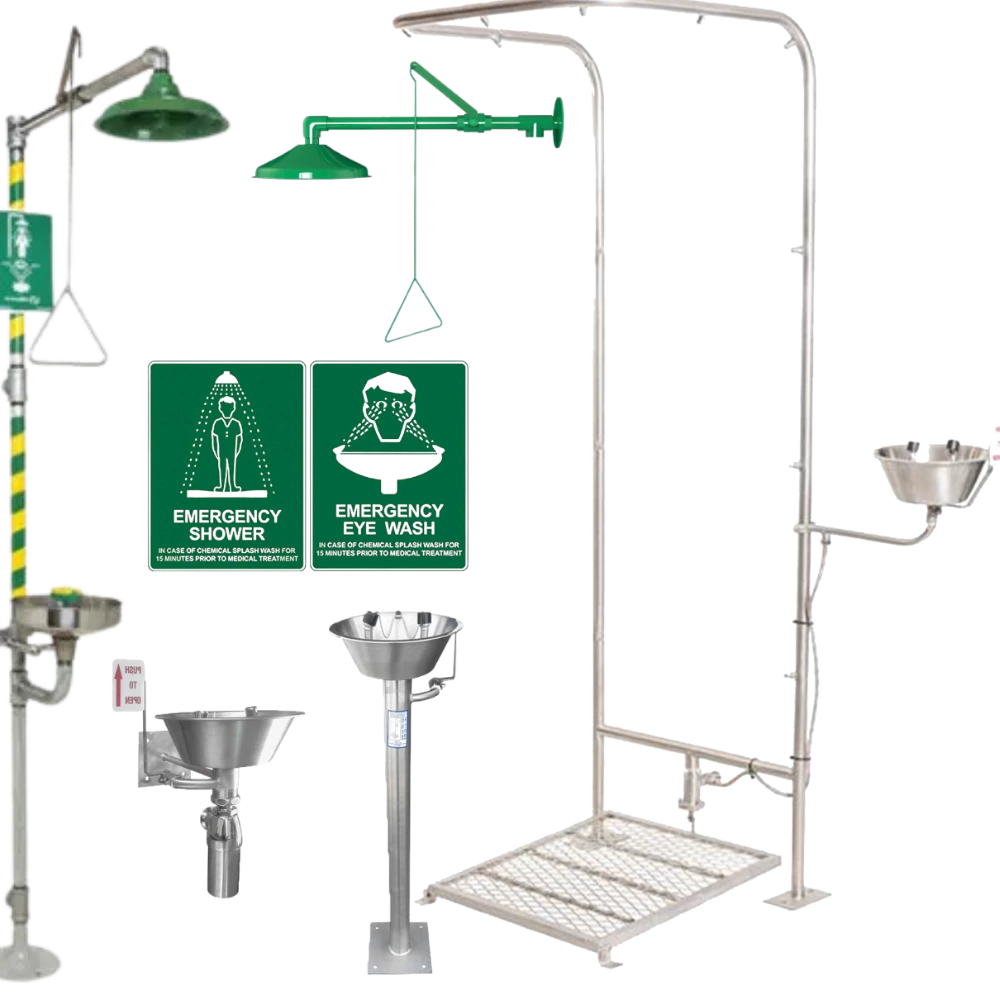
To be effective, emergency safety showers must meet specific performance and installation requirements as outlined by standards like ANSI/ISEA Z358.1-2014 and OSHA regulations.
Showers must be located within 10 seconds' walk (approximately 16.8 meters or 55 feet) of potential hazards, on the same level, with a clear, unobstructed path. The area must be well-lit and clearly marked with visible signage.
Units must activate in one second or less and remain operational without the operator's hands to allow for clothing removal and thorough rinsing. This is typically done via a pull-chain, push-handle, or foot treadle.
A safety shower must deliver a minimum flow of 75.7 L (20 Gal) of water per minute for at least 15 minutes. This ensures sufficient time for decontamination as required by the chemical's Safety Data Sheet (SDS).
The water must be "tepid", within a range of 16°C to 38°C (60°F to 100°F). Water that is too cold can cause thermal shock or hypothermia, while water that is too hot can scald or increase chemical absorption.
The equipment should be made of durable, corrosion-resistant materials, such as stainless steel, to withstand harsh industrial environments.
Regular testing (weekly activation and annual inspection) is crucial to ensure proper function and prevent stagnant water issues. Employees must be trained on the location and correct usage procedures.
Emergency safety eye washers are crucial first aid equipment designed for rapid decontamination in workplaces where employees might be exposed to hazardous materials. They provide a high volume of water to flush chemicals from the face and eyes of a person, minimizing injury risk and ensuring compliance with safety regulations.
All emergency eyewash stations must be located within 10 seconds or approximately 55 feet from the potential hazard.
Units must be easy to activate quickly, with a mechanism that allows for hands-free operation once triggered to hold the eyelids open during flushing.
According to the ANSI Z358.1 standard, eyewash stations must deliver a continuous flow of tepid water (16-38°C or 60-100°F) for at least 15 minutes.
All stations require regular inspection to ensure they are functional and clean. Portable units' solution or water must be sealed and not expired.