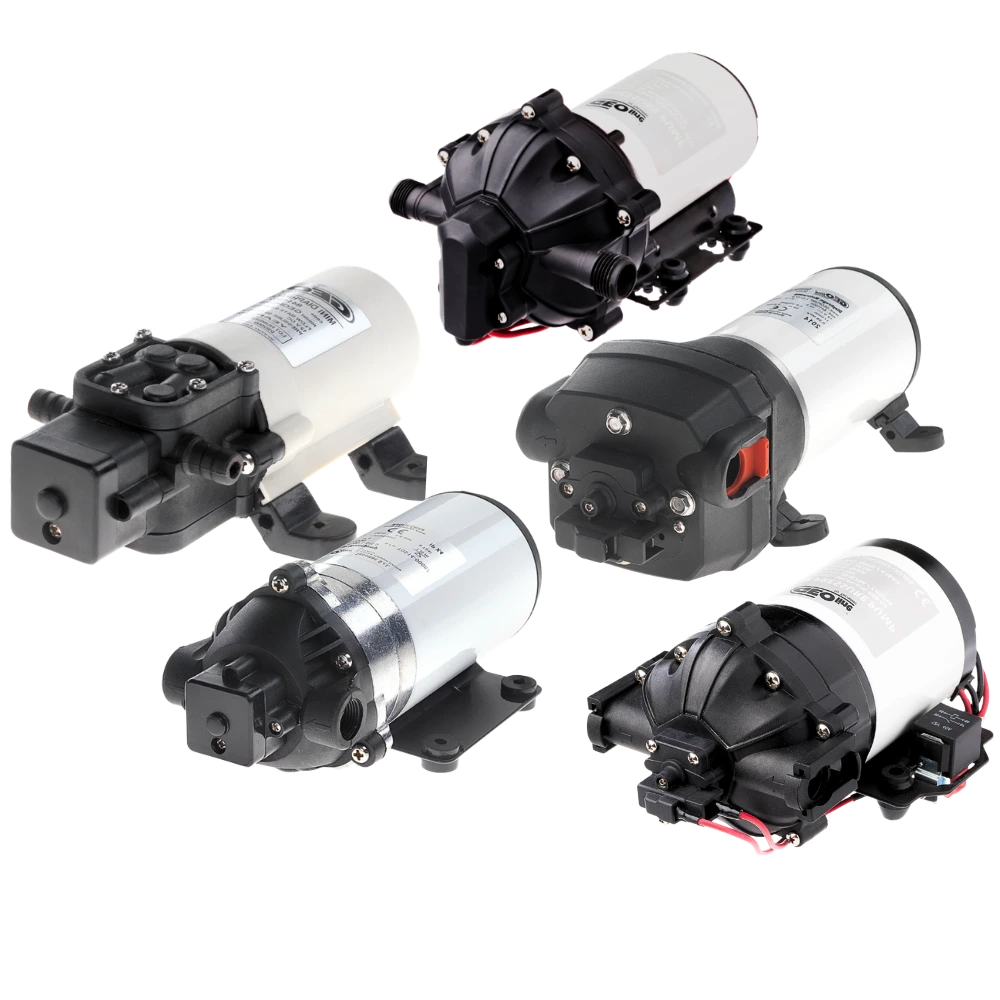
A diaphragm pump is a positive displacement pump, that uses a flexible, reciprocating diaphragm to move various fluids, including aggressive chemicals, viscous liquids, and slurries.
They are highly versatile, self-priming, can run dry without damage, and are often used in demanding industrial applications.
How Diaphragm Pumps Work
The pump uses the reciprocating action of one or two flexible diaphragms, along with a set of non-return check valves, to draw and expel fluid.
Suction: As the diaphragm moves away from the pump chamber (volume increases), pressure inside the chamber decreases, and fluid is drawn in through the suction port and past the inlet check valve.
Discharge: When the diaphragm moves back into the chamber (volume decreases), pressure increases, forcing the inlet check valve closed and the outlet check valve open, pushing the fluid out through the discharge manifold.
This action is similar to that of a cylinder in an internal combustion engine. Double diaphragm pumps use two chambers and two diaphragms to provide a more continuous and efficient flow.