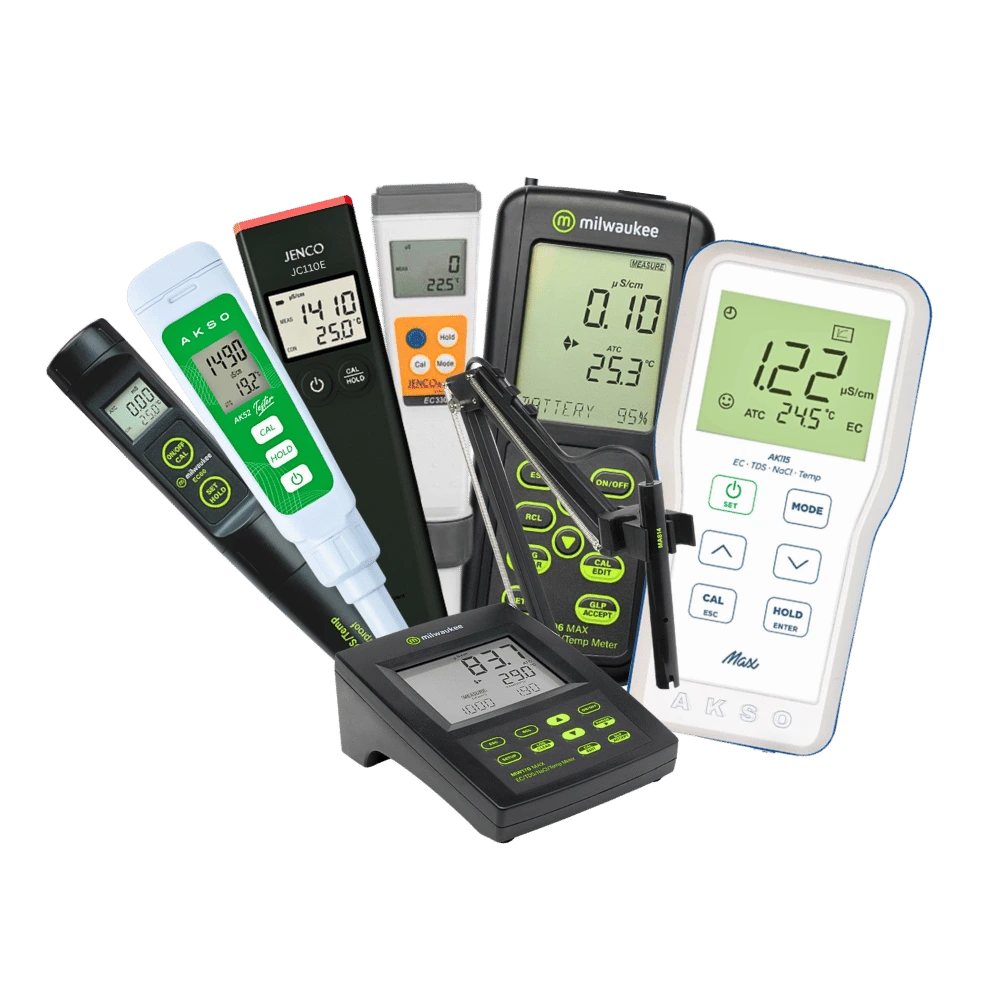
An electrode conductivity meter is an analytical instrument that uses an electrode probe (or sensor) to measure the electrical conductivity of a solution. This measurement indicates the concentration of dissolved ions (salts, acids, bases) in the liquid, as these ions are responsible for carrying an electrical current.
A TDS meter is a compact device used to measure the total concentration of Total Dissolved Solids (TDS) in a liquid, most commonly water. It provides a quick estimate of water purity, expressed in parts per million (ppm), but does not identify specific contaminants.
How EC Meters Work
A conductivity meter works on the principle that the ability of a solution to conduct electricity is directly proportional to the number of free ions it contains.
Voltage Application: The meter applies an alternating electrical voltage to the electrodes within the probe when submerged in the solution.
Current Measurement: The ions in the solution move towards the oppositely charged electrodes, creating an electrical current flow.
Conductivity Calculation: The meter measures the resistance (or the inverse, conductance) to the current flow and converts it into a conductivity value, typically displayed in units like microsiemens per centimeter (
𝜇S/cm) or millisiemens per centimeter (mS/cm).
Temperature Compensation: Because conductivity is temperature-dependent (conductivity increases as temperature rises), most modern meters include a temperature sensor to automatically compensate measurements to a standard reference temperature (usually 25 °C) for accuracy.
How TDS Meters Work
A TDS meter operates by measuring the electrical conductivity (EC) of the water.
Conductivity Principle: Dissolved inorganic solids, such as salts, minerals (calcium, magnesium, potassium), and metals, create ions that allow water to conduct an electrical current.
Measurement: The meter has two electrodes that are submerged in the water and apply a small electrical current. It measures how easily the current flows between them.
Conversion: This conductivity measurement is then converted into a TDS value (in ppm) using a pre-programmed conversion factor, typically ranging from 0.5 to 0.7.
Pure water (like distilled or reverse osmosis water) has very low conductivity and thus a low TDS reading, close to 0 ppm.
Types of Electrodes/Probes
2-Electrode: Simple and suitable for low to medium conductivity ranges, such as deionized water or drinking water.
4-Electrode: Offer higher accuracy across a wider range of conductivity and are less prone to polarization and fouling effects, making them ideal for high-conductivity or "dirty" samples like wastewater.